Digital Harmony: Steering Social Media Towards Positive Mental Health and Active Societal Participation
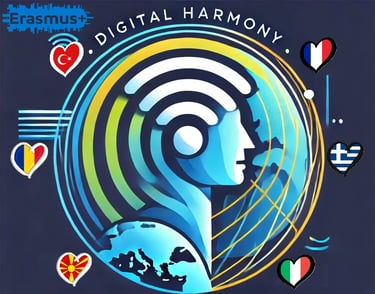
Digital Harmony Toolkit
This section presents a collection of innovative French lesson plans designed to strengthen students' digital citizenship, critical thinking, and emotional well-being. Through interactive activities such as online debates using Kialo, collaborative discussions, and emotion-based games, students develop respectful online communication, argumentation skills, media literacy, empathy, and awareness of the impact of social media on mental health. The lessons promote responsible digital behavior while encouraging active participation, reflection, and informed decision-making in today's digital world.
This section presents a series of Greek lesson plans that help students become empathetic, responsible, and critical participants in the digital world. Through AI-assisted sentiment analysis, cyberbullying awareness activities, music and arts-based learning, digital citizenship workshops, structured online debates, and fact-checking exercises, students develop emotional intelligence, respectful communication, media literacy, and critical thinking. The lessons encourage learners to recognise harmful online behaviour, evaluate digital information responsibly, and build inclusive, safe, and respectful digital communities.
This section presents Romanian lesson plans that promote digital well-being, online safety, and responsible digital citizenship among secondary school students. Through interactive discussions, debates, speaking activities, collaborative poster creation, and reflection exercises, students critically examine the impact of social media, learn how to protect their digital identity, recognize online threats, practice respectful online communication through netiquette, and develop healthier screen-time habits. The lessons strengthen critical thinking, intercultural communication, digital responsibility, and students' ability to navigate the online world safely and confidently.
This section presents Italian lesson plans that connect digital innovation, environmental sustainability, and career readiness through engaging, project-based learning activities. Students explore sustainable technologies, smart digital solutions, and green entrepreneurship while designing eco-friendly routines, developing sustainable start-up ideas, and creating business models that address real environmental challenges. The lessons also prepare learners for the future labour market by strengthening essential transversal skills—including creativity, critical thinking, collaboration, communication, and continuous learning—through simulations, design thinking, teamwork, self-assessment, and practical challenges. By combining digital tools with sustainability and entrepreneurial thinking, the activities encourage students to become innovative, responsible, and future-ready citizens capable of contributing to a greener and more digital society.
This section presents Turkish lesson plans that help students develop the knowledge, attitudes, and practical skills needed to navigate the digital world safely, responsibly, and confidently. Through interactive, inquiry-based activities, students explore digital identity and employability, healthy screen-time habits, mental well-being in online environments, cybersecurity, media literacy, democratic participation, digital rights, and freedom of expression. Learners create professional digital profiles, reflect on their online behaviour, design digital wellness plans, identify misinformation, discuss ethical dilemmas related to cybersecurity, and examine the opportunities and challenges of digital activism. By combining reflection, collaboration, role-playing, debates, case studies, and project-based tasks, these lessons strengthen critical thinking, digital citizenship, communication, emotional resilience, and responsible online decision-making, preparing students to become informed, ethical, and active participants in an increasingly digital society.
This section presents a series of North Macedonian lesson plans that introduce learners to the foundations of artificial intelligence while encouraging responsible, ethical, and balanced engagement with digital technologies. Students explore how AI and algorithms influence everyday life, shape online experiences, affect emotions and decision-making, and support or challenge mental well-being. Through discussions, case studies, simulations, ethical debates, collaborative projects, and reflective activities, learners critically examine topics such as algorithmic bias, AI-powered mental health tools, digital manipulation, privacy, transparency, and healthy technology habits. The section concludes with a capstone project in which participants synthesize their learning by creating and presenting collaborative outputs that demonstrate their understanding of AI, digital literacy, ethical responsibility, and digital well-being. These lesson plans foster critical thinking, creativity, collaboration, responsible digital citizenship, and informed decision-making, equipping learners with the knowledge and skills needed to navigate an AI-driven world confidently and ethically.
This Digital Toolkit present a comprehensive collection of lesson plans developed by the project partners to strengthen students' digital literacy, responsible digital citizenship, critical thinking, and digital well-being. Each part reflects the educational expertise and innovative approaches of a different partner country while addressing common themes such as online safety, media literacy, artificial intelligence, ethical technology use, mental well-being, sustainability, entrepreneurship, and responsible participation in digital environments. Through interactive, learner-centred methodologies—including debates, collaborative projects, simulations, creative tasks, case studies, and reflective activities—the toolkit equips educators with practical resources to help learners develop the knowledge, skills, and attitudes needed to navigate today's rapidly evolving digital world confidently, critically, and responsibly. Together, these six sections provide a diverse yet coherent educational framework that promotes inclusion, creativity, lifelong learning, and active digital citizenship across different educational contexts.
---------------------------------------------
© 2025. All rights reserved.